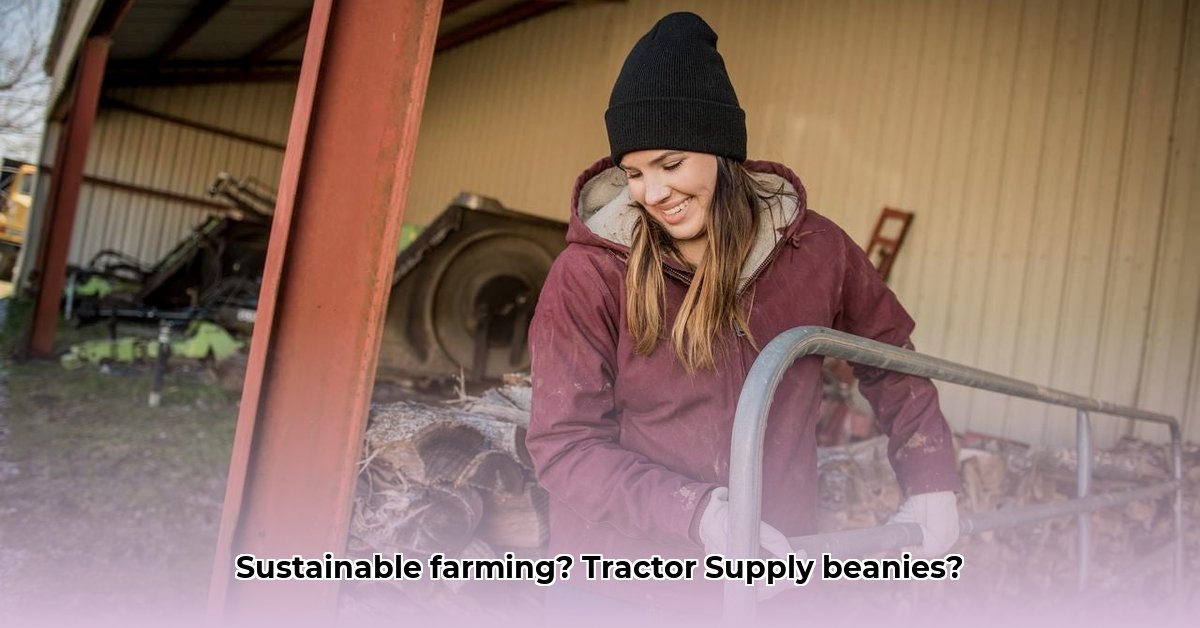
Tractor Supply Beanies: A Sustainable Choice for Modern Farmers?
The modern farmer faces numerous challenges, from optimizing yields to minimizing environmental impact. While seemingly insignificant, the everyday tools and apparel used on the farm can play an unexpected role in sustainability efforts. This article explores the potential connection between a Tractor Supply beanie and the growing movement towards sustainable agriculture. Could a simple beanie contribute to a farmer’s commitment to environmentally conscious practices? Let's examine this question.
It’s tempting to dismiss a beanie’s impact. However, the increasing demand for sustainable and ethically produced goods extends to all aspects of farming, from the seeds sown to the clothing worn in the field. A Tractor Supply beanie, if produced sustainably, could represent a small but valuable step in this direction. For more Tractor Supply deals, check out this week's circular.
Sustainable Farming Practices: A Holistic Approach
Sustainable agriculture encompasses far more than simply growing crops without harming the environment. It’s a holistic approach focused on resource efficiency, biodiversity protection, and long-term economic viability. This encompasses various aspects, including soil health, water management, pest control, and responsible energy consumption. Every element, from the seeds used to the farmer's clothing, can impact the overall sustainability of the operation.
Are you aware that the agricultural sector accounts for a significant portion of global greenhouse gas emissions? By embracing sustainable practices, farmers can significantly reduce their carbon footprint and promote environmental health.
The Tractor Supply Beanie: Analyzing its Potential for Sustainability
The sustainability of a Tractor Supply beanie hinges on multiple factors. Crucially, the sourcing of materials, the manufacturing process, and the packaging all contribute to its overall environmental impact. Let’s analyze each:
Material Sourcing: Is the beanie made from recycled materials, such as recycled polyester? Using recycled materials reduces the demand for virgin resources, lowering energy consumption and emissions associated with production.
Manufacturing Process: What energy sources power the manufacturing facility? Does the factory prioritize waste reduction and employ environmentally responsible manufacturing techniques? These details have a substantial effect on the overall environmental footprint.
Packaging: Does the beanie come in recyclable packaging? The packaging itself plays a significant role in the overall sustainability of the product. Avoidance of single-use plastics is a crucial aspect of environmentally conscious product design.
How important is transparency in the supply chain? Consumers deserve readily available information on the materials used, manufacturing processes, and the overall environmental impact of their purchases. Only with this level of transparency can informed purchasing decisions be made.
Hypothetical Comparison: Sustainable vs. Conventional Beanies
To illustrate the potential difference, let's compare two hypothetical beanies:
| Beanie Type | Material | Manufacturing Process | Packaging | Recyclability |
|---|---|---|---|---|
| Tractor Supply Beanie (A) | Recycled Polyester | Renewable Energy Powered | Recycled Cardboard | High |
| Generic Beanie (B) | Virgin Polyester | Conventional Processes | Plastic Bag | Low |
The disparity between these hypothetical scenarios highlights the significant impact even a simple beanie can have depending on the production methods employed.
Dr. Anya Sharma, Professor of Environmental Science at the University of California, Berkeley, notes, "Even seemingly small consumer choices, like selecting a sustainably produced beanie, contribute to a larger collective effort toward environmental responsibility within the agricultural sector." This illustrates the ripple effect of conscious consumerism.
The Future of Sustainable Agriculture and the Role of Consumer Choice
The pursuit of sustainable agriculture is an ongoing journey. Constant innovation and technological advancements are vital to optimizing farming practices and minimizing environmental harm. Further research into sustainable materials, manufacturing processes, and packaging are crucial steps forward.
By embracing sustainable products, like a responsibly produced Tractor Supply beanie (hypothetically), consumers actively support companies committed to environmentally friendly practices. This consumer-driven demand for sustainability pushes companies to adopt more environmentally conscious methodologies. It’s a positive feedback loop fostering environmental stewardship.
Implementing Precision Farming for Enhanced Sustainability
Precision farming offers a powerful approach to optimizing resource utilization and minimizing environmental impact in agriculture. It leverages technology to tailor farming practices to specific areas within a field, markedly improving efficiency and sustainability.
Leveraging Precision Farming Techniques
Precision farming involves several key components:
- GPS Guidance Systems: Enabling accurate application of inputs.
- Sensors: Monitoring soil conditions, crop health, and environmental parameters.
- Data Analytics: Analyzing data to create field-specific strategies.
- Variable Rate Technology: Optimizing input application across varying field conditions.
By implementing these techniques, farmers can significantly reduce waste, enhance resource utilization, and ultimately, yield more sustainable harvests. The initial investment can be significant, but the long-term economic and environmental benefits often outweigh the costs. As Dr. Jian Li, a leading agricultural engineer at Cornell University, suggests, “The transition to precision farming is a crucial investment in the future of sustainable food production.”
Steps to Implement Precision Farming:
- Assess Your Farm's Needs: Identify challenges and opportunities for optimization.
- Acquire Necessary Technology: Select suitable GPS systems and sensors.
- Analyze Collected Data: Generate field maps highlighting areas requiring specific attention.
- Implement Variable Rate Application: Tailor input application based on collected data.
- Continuously Monitor and Adjust: Adapt strategies based on ongoing results and feedback.
Precision farming, while requiring a technological and strategic investment, significantly contributes to sustainable agricultural practices. The reduced waste of resources, improved efficiency, and enhanced yields demonstrate the positive impact of embracing innovation in the field.